Retail
→
Conversion · margin · availability
Search conversion
Inventory availability
Promo profitability
Refund spike

When a number you own starts to slip, Bicycle catches the moving slice, finds the cause, and lines up the next step. It surfaces the answer before it ever hits a dashboard. You walk into the meeting already knowing why.
A dashboard shows you the number after it moves. A chatbot answers what you type. Bicycle finds the problem first.
No credit card required
Ranked #1 by impact. Est. exposure $42k. It found you, before you opened a dashboard.

“Focusing on aggregate metrics might boost our bottom line, but true profit growth often lies in the details. Bicycle empowers us to spot hyper specific opportunities and pinpoint key drivers. This shift from broad strokes to precision targeting is transforming our supply chain strategy.”


“With over 45,000 restaurant locations leveraging the UrbanPiper software and processing millions of orders every week, Bicycle has been pivotal in our approach to data-driven decision-making.”


“Bicycle AI gives us real-time visibility into settlement performance that we simply didn’t have before. We can spot issues early, understand why they’re happening, and take action before they impact our customers.”


“Our supply chain and logistics technology relies on real-time data from a variety of sources. Bicycle supplements our data science efforts by providing proactive, event-driven insights to help deliver a superior customer experience.”

Same number, two operating models. One sends you to a ticket and a dashboard. The other brings the answer, the why, and the next step to you.
Six capabilities, set up once and run continuously. Business teams move faster, the data team keeps governance, everyone trusts the number. Pick one to go deeper.
"What caused this?" turns into a three-day Slack thread across data, product, ops, and engineering, and the answer still arrives without evidence.
Open the cause summary. Ranked business and technical causes. The likely driver is named, with confidence and impact.
See the evidence. Logs, deploys, pricing changes, supplier behavior, and search relevance, with the data attached.
Know what was ruled out. The negative findings close the debate before it starts.
"Mobile checkout dropped 4% on iOS." Cause: Apple Pay button failing since 9:42am, release v4.18.2. Ruled out: pricing, inventory, promo, weather.
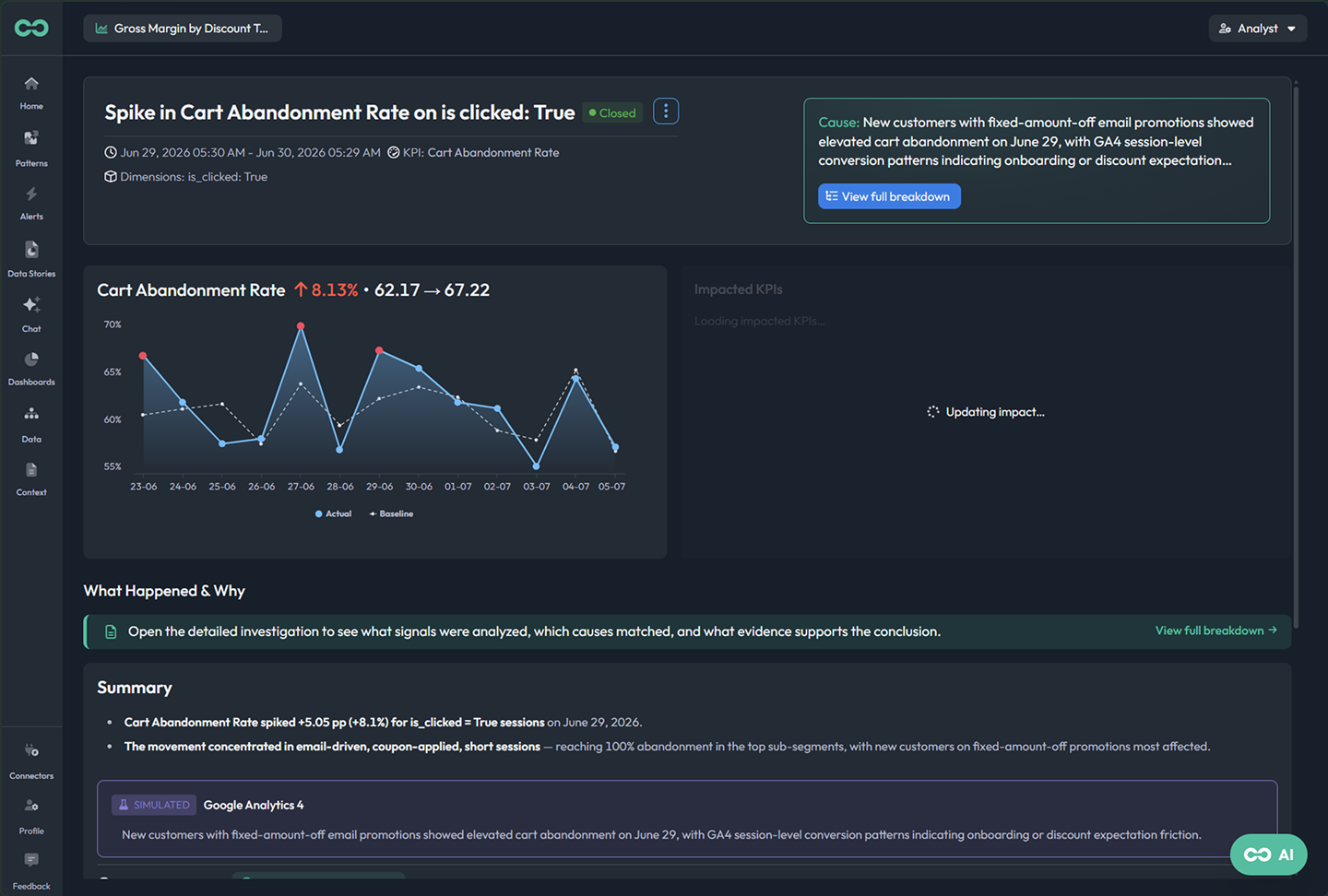
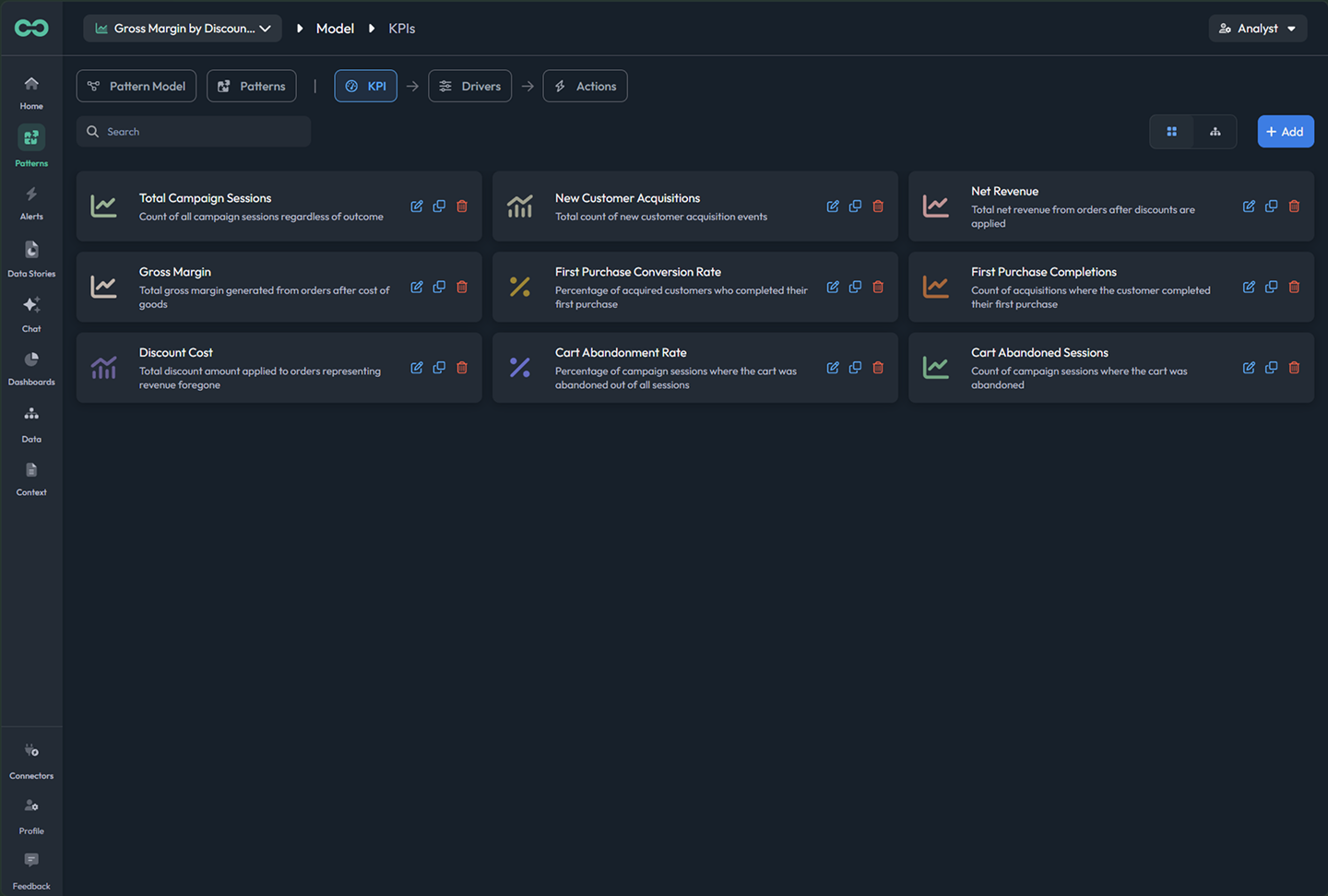
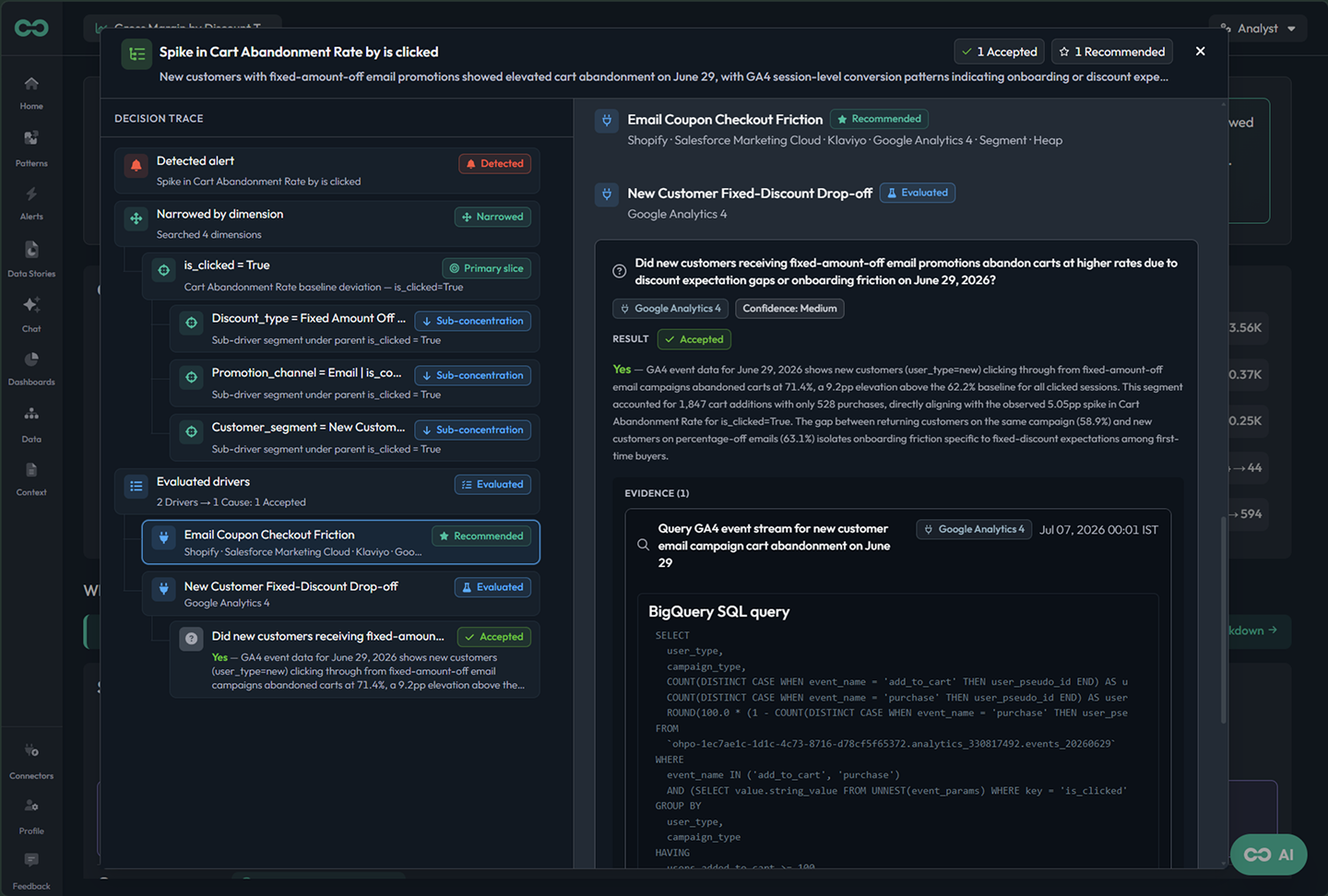
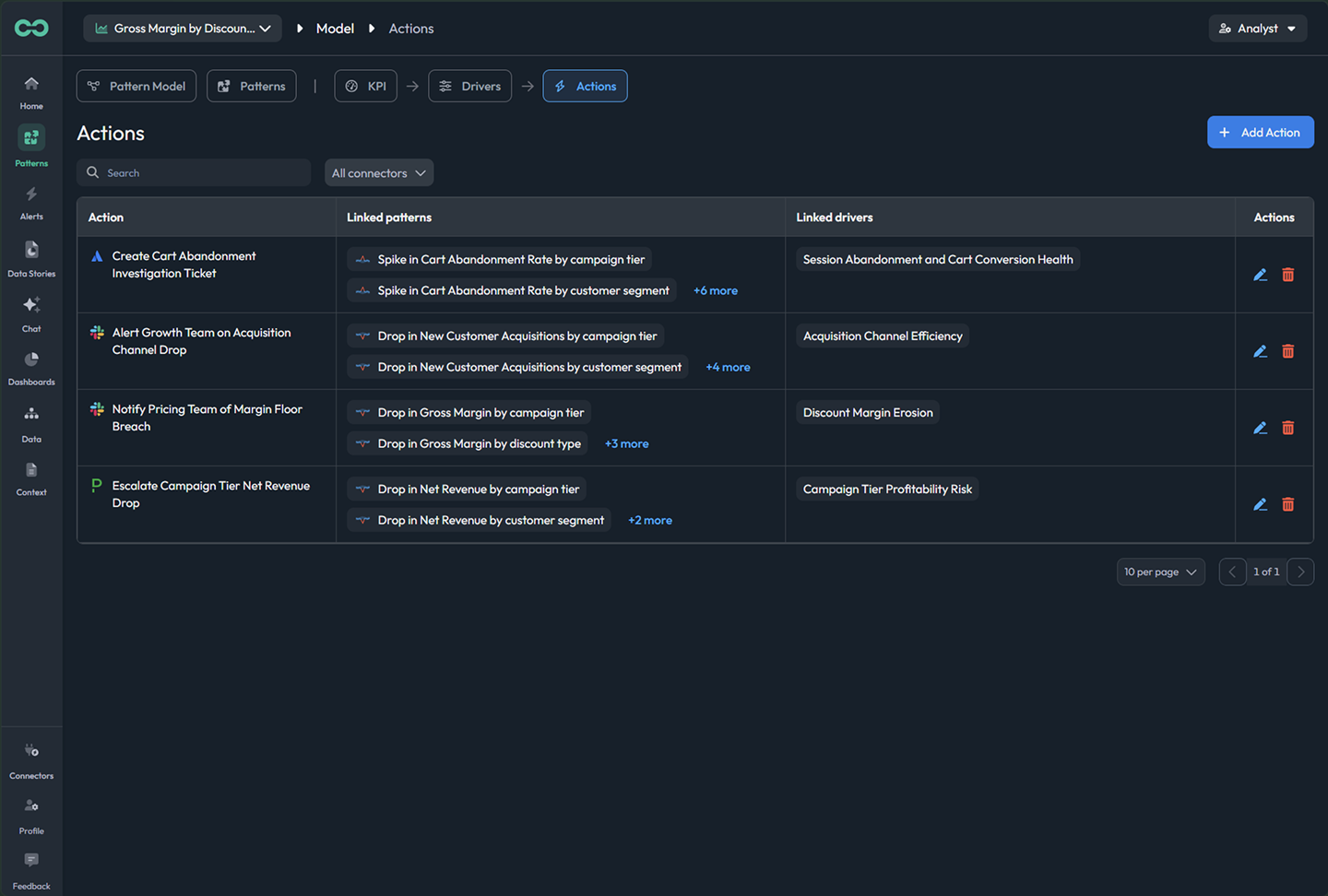
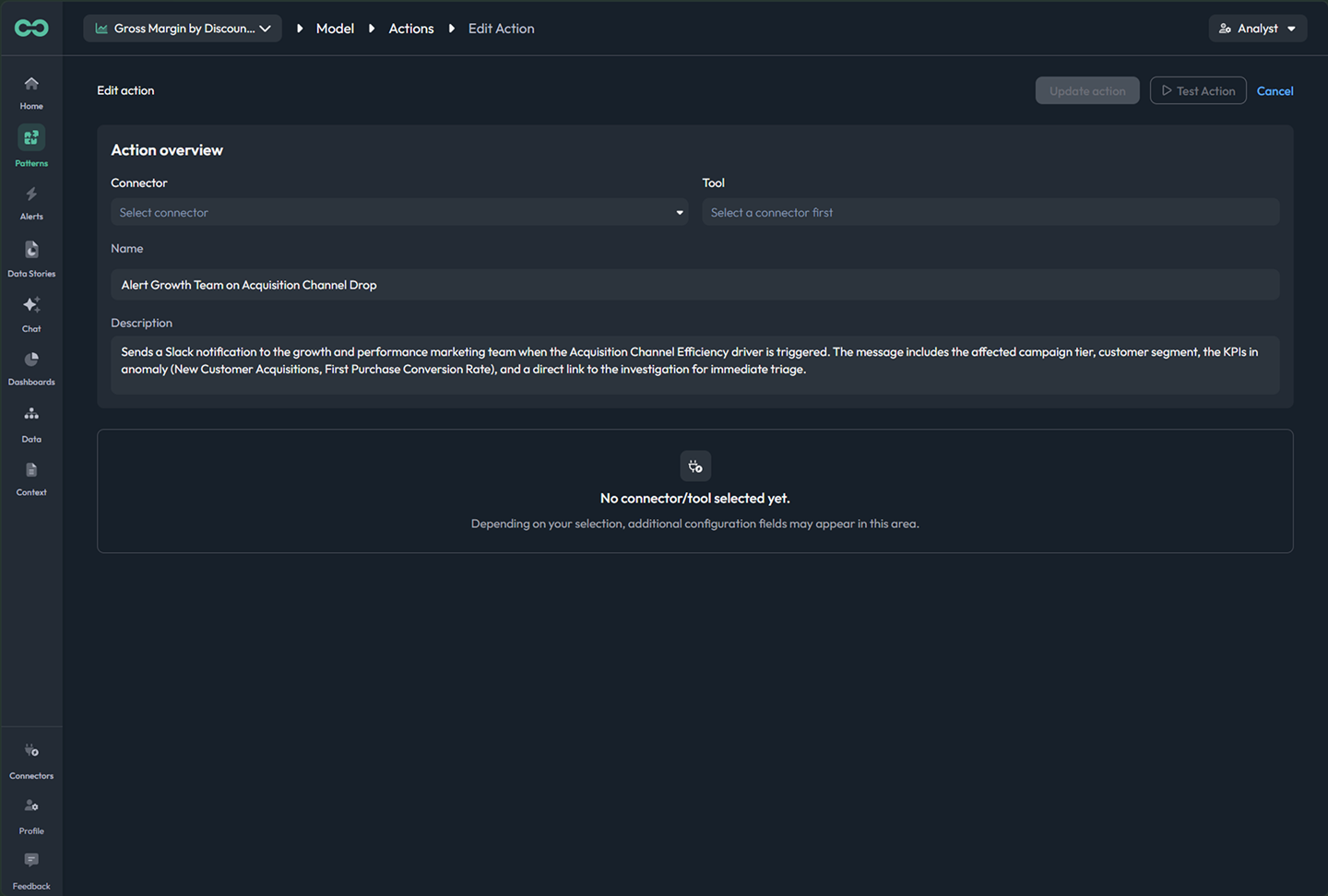
Checkout conversion dropped on iOS overnight. Bicycle has already checked where it moved, ranked the likely causes, attached the evidence, and kept the definition governed. You review the move, check the evidence, route the fix to the owner, and reuse it on the next drop.
Operators act on the move in front of them. Execs steer the longer range. Both work from the same governed numbers. The value just shows up differently.
You don't need forty dashboards. You need the handful of moves that matter across the business, the narrative behind them, and enough confidence in the numbers to commit a quarter to them.
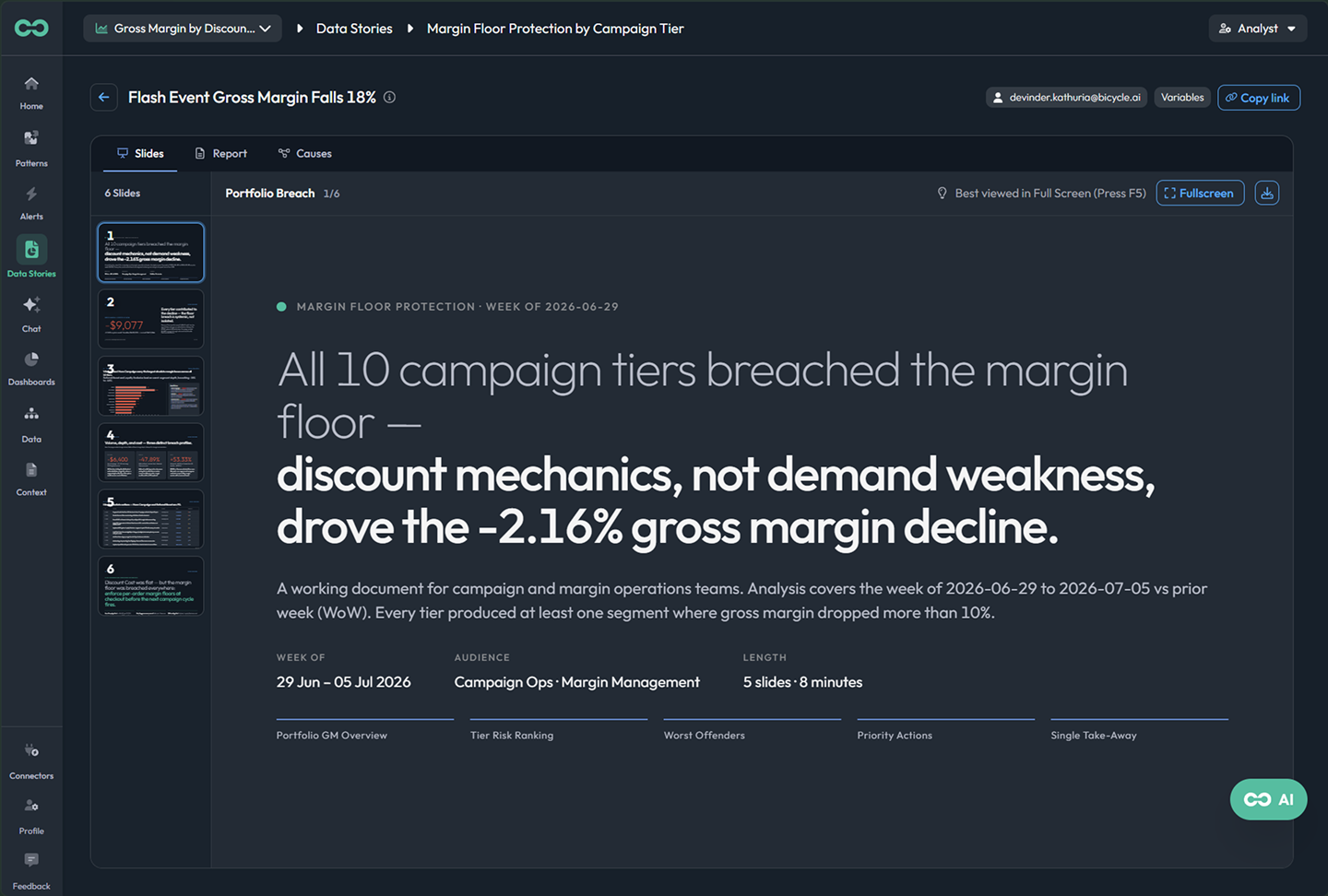
"One brief, the whole business. The three moves worth a meeting, with the story already written."
Exec pattern · strategic narrativeYou're on the hook for conversion, approvals, bookings, margin. Bicycle tells you the moment your number moves, why it moved, and what to do. You act on the same shift, not the post-mortem.
"The 'why did this move?' answer shows up with the alert. I act on the same shift, not the recap."
Operator pattern · tactical decisionsBoth work from the same numbers, the ones everyone agrees on. Not separate dashboards, side chats, and spreadsheet versions.
Pre-built use-case packs activate for the metrics where your business actually breaks. You start with answers on day one, not a blank model to build from scratch.
Every answer you get is one you can defend, because the data team governs the model underneath. You move quickly without going off-book.
The figure in your brief is the same one in the exec deck and the board pack. Governed definitions feed every surface.
Answer to source query to evidence. Lineage is always attached, so "why does it say that?" has an answer.
The actions you can take are scoped by the data team, with previews, approvals, and rollback on every one.
Pick one number you care about: checkout conversion, payment success, activation. Connect it, and Bicycle watches that KPI, ranks the likely causes, and hands you a first-pass answer before your next meeting. No data team. No ticket. No waiting.
No credit card · read-only, nothing to install · you're running in minutes
The fastest way to try Bicycle. Ask in plain language and watch it detect a KPI move, explain the cause, and show the safe next step.
Learn more