Bicycle AI analyzes search, pricing, checkout, payment, and PNR flows in real time, uncovers bookability shifts by carrier and route, and routes fixes to the right owner.

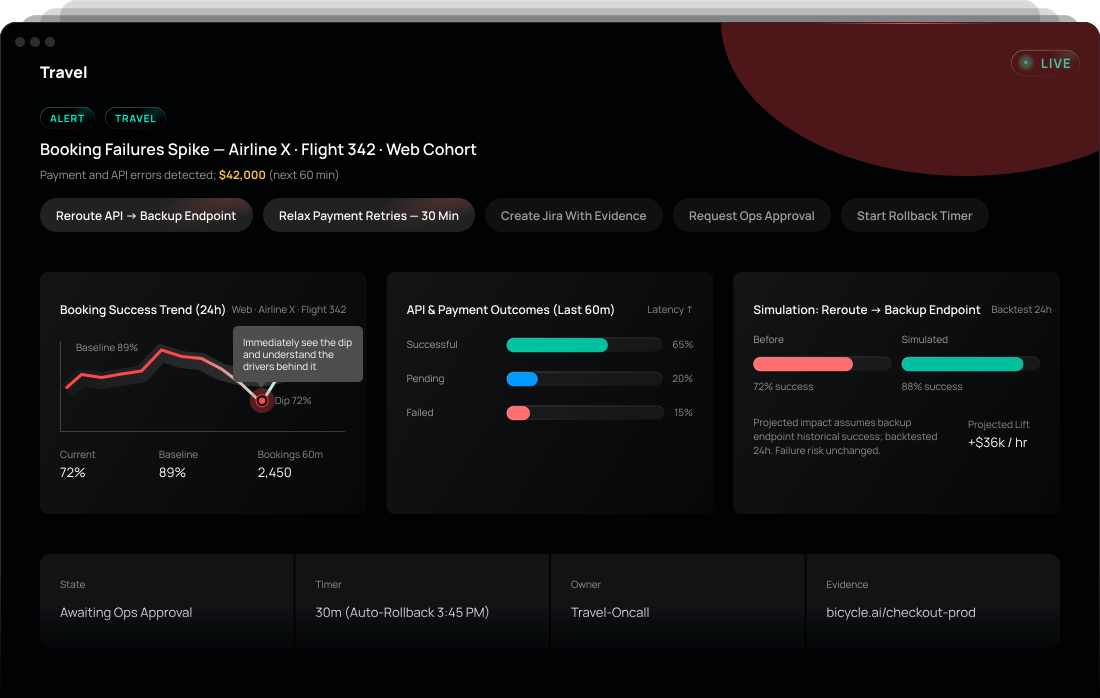
Typical detection → mitigation
Slice by device & market
Using your current stack
Every change logged
Spot fare/availability mismatches by channel or partner, detect itinerary breakages early, quantify revenue at risk, and trigger guarded fixes without waiting for dashboards or manual triage.
Keep search and booking latency within bounds, validate partner/GDS response behavior by cohort, detect mispriced itineraries, and fail over safely with simulation and auto-rollback.
Plug raw tables/logs—no semantic layer rebuild—compose agent checks that protect revenue, enforce RBAC/PII and approvals, and give every team a governed, auditable action layer they can operate.
Scope rejections by carrier, route, and device. Inspect error mix and latency profile. Route to the owner who can act.
When a supplier degrades, temporarily remove it with a timer and rollback. Traffic shifts to healthy sources and returns on recovery. This works closely with Bookability insights to automate safe mitigation.
Route traffic to a healthier partner when a supplier API slows, with rollback to avoid over-allocation.
Detect stale fares between suppliers, GDS, and OTA feeds. Apply safe refresh rules and auto-reconcile.
Detect meaningful drops on watched routes and push ready-to-send campaigns to capture demand while the window is open.
Correlate promo validation and 3-DS handoffs with drop-offs. Quantify bookings at risk for quick product decisions.
Tie latency to abandonment and open fallback paths (alternate dates/airlines/hotels).
See drops in seat bags, meals, or bundles by route/device/partner and propose recovery actions.
Bookability drops 15% on a high-demand route
Payment failures spike for a wallet on mobile
Supplier API degradation during peak hours
Weekly dashboards show overall drop, no route details.
Aggregated numbers seem fine.
Conversions drop unnoticed until weekly review.
Some latency spikes visible, no revenue impact guidance.
Gateway shows some retries, no fix recommendation.
Errors logged, no action guidance.
Errors logged, but no actionable insight.
Version-specific script errors noted.
Traces show failures, no route optimization.
Flags affected route × carrier × device, calculates revenue at risk, proposes routing or fallback for affected traffic.
Isolates device + wallet version, proposes safe fallback (card checkout), auto-rollbacks, and triggers fix ticket.
Auto-switches traffic to healthy suppliers, sets timers for recovery, logs changes for audit.
“NYC → LAX on Carrier X; unscheduled API errors; protect $52K by routing to Carrier Y.”
“iOS v8.3 wallet fails; route to card checkout; hotfix issued; $34K protected.”
“Supplier Z removed for 30 min; traffic rerouted; bookings recovered; report sent.”
Analyze millions of daily searches across countries and regions. Detect mispriced inventory and routing issues, and route actionable insights to the right owners.
Track traffic and conversion anomalies. Correlate partner API performance with drop-offs and suggest safe, reversible mitigation steps.
Identify approval bottlenecks and itinerary failures. Quantify revenue at risk and propose quick fixes or fallbacks.
Analyze direct booking engines for fare mismatches, booking failures, and latency spikes. Recommend guarded fixes and rollback options.
Detect schedule mismatches, seat map outages, and inventory discrepancies. Propose safe rerouting and fallback providers.
Track distributed inventory and dynamic availability for experiences and rentals. Recommend reversible actions to protect conversion.
Analyze attach rates and booking drops. Suggest temporary rule relaxations or alternative placements to maintain revenue.
Track reward redemptions, mispriced rewards, and partner sync issues. Recommend precise corrective actions with rollback safeguards.

Connects directly to high-volume data, including GDS/NDC feeds and gateways. We are a non-intrusive action layer; requires zero semantic rebuild or rip-and-replace.

Provides full audit trails critical for compliance and reversibility. We enforce RBAC/PII controls and never train models on your proprietary data.

Integrates with mission-critical systems and operational tools (Jira, Slack) to trigger auto-mitigation (like carrier failover) and route fix tickets based on revenue impact.
Our Supplier Circuit-Breaker instantly detects partner API slowness or failure, calculates the bookings at risk, and automatically reroutes traffic to a healthier supplier or GDS endpoint. It operates with a timer and auto-rollback for safe recovery.
Bicycle AI inspects the specific error mix by carrier, route, and device. It quantifies the booking dollars at risk and delivers actionable instructions or triggers system failovers to the team best equipped to resolve the carrier or routing issue.
We continuously analyze your pricing and inventory feeds against supplier sources. Bicycle AI instantly flags stale fares or mispriced itineraries and can apply safe, pre-approved refresh rules or auto-reconcile data before customers encounter booking friction
We tie latency and errors to specific outcomes. If ancillary attach drops (e.g., for certain routes/devices), we suggest and can deploy temporary promo/placement adjustments. For search drops, we open fallback paths like alternative dates or carriers.
Integration is non-disruptive. We plug into your existing data streams (GDS, NDC, logs, ticketing) in 2–3 weeks. You gain an actionable, auditable layer on top of your current stack, protecting revenue almost immediately.