Retail
→
Conversion · margin · availability
Search conversion
Inventory availability
Promo profitability
Refund spike

Bicycle brings that same leverage to analytics that cursor brought to developers: governed answers, recurring investigations, and next-step recommendations, running across the stack you already use.
Cursor didn't replace engineers. It multiplied what one team could do, and the teams that adopted early pulled away.
No credit card required

“Focusing on aggregate metrics might boost our bottom line, but true profit growth often lies in the details. Bicycle empowers us to spot hyper specific opportunities and pinpoint key drivers. This shift from broad strokes to precision targeting is transforming our supply chain strategy.”


“With over 45,000 restaurant locations leveraging the UrbanPiper software and processing millions of orders every week, Bicycle has been pivotal in our approach to data-driven decision-making.”


“Bicycle AI gives us real-time visibility into settlement performance that we simply didn’t have before. We can spot issues early, understand why they’re happening, and take action before they impact our customers.”


“Our supply chain and logistics technology relies on real-time data from a variety of sources. Bicycle supplements our data science efforts by providing proactive, event-driven insights to help deliver a superior customer experience.”

Faster onboarding, fewer repeat investigations, and decisions backed by evidence, with your team governing every definition, answer, and action.
Set up once, run continuously. Each capability is reviewable and governed by your team, so the business self-serves on a number it can trust. Pick one to go deeper.
Root cause depends on tribal analyst knowledge. Every new team, KPI, or region adds more manual investigation work.
Narrow to the focus frame. Impacted segments, KPI nodes, cohorts, and journey steps. Analysis starts from the right scope.
Evaluate driver categories. Business, technical, and external drivers tested via cause connectors you configure.
Show the work. Ranked causes, evidence, confidence, ruled-out drivers, and next checks, all reviewable.
Conversion drop on mobile. Bicycle evaluates 8 drivers across deploys, pricing, session friction, and routing. Tribal knowledge becomes a reusable driver tree.
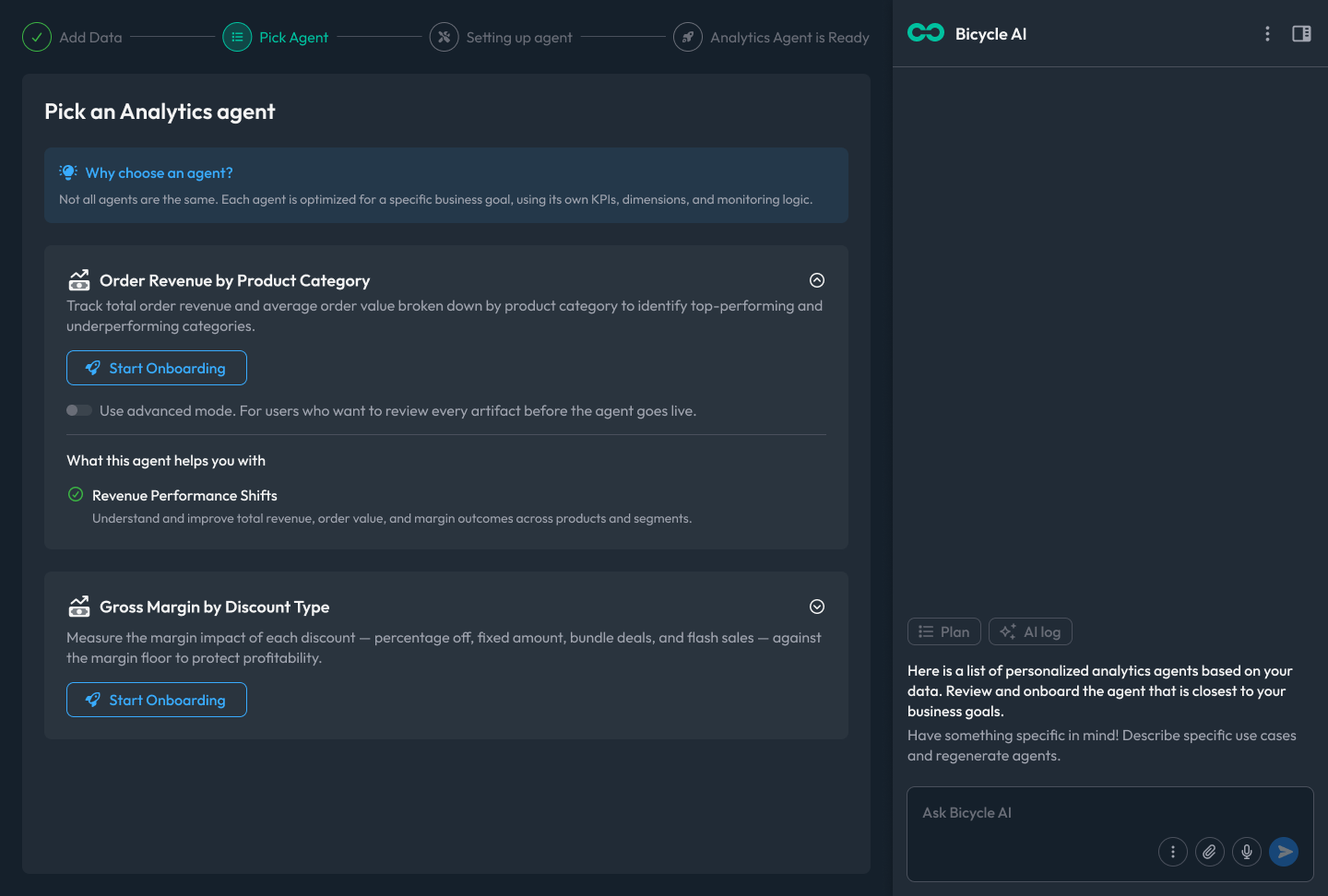
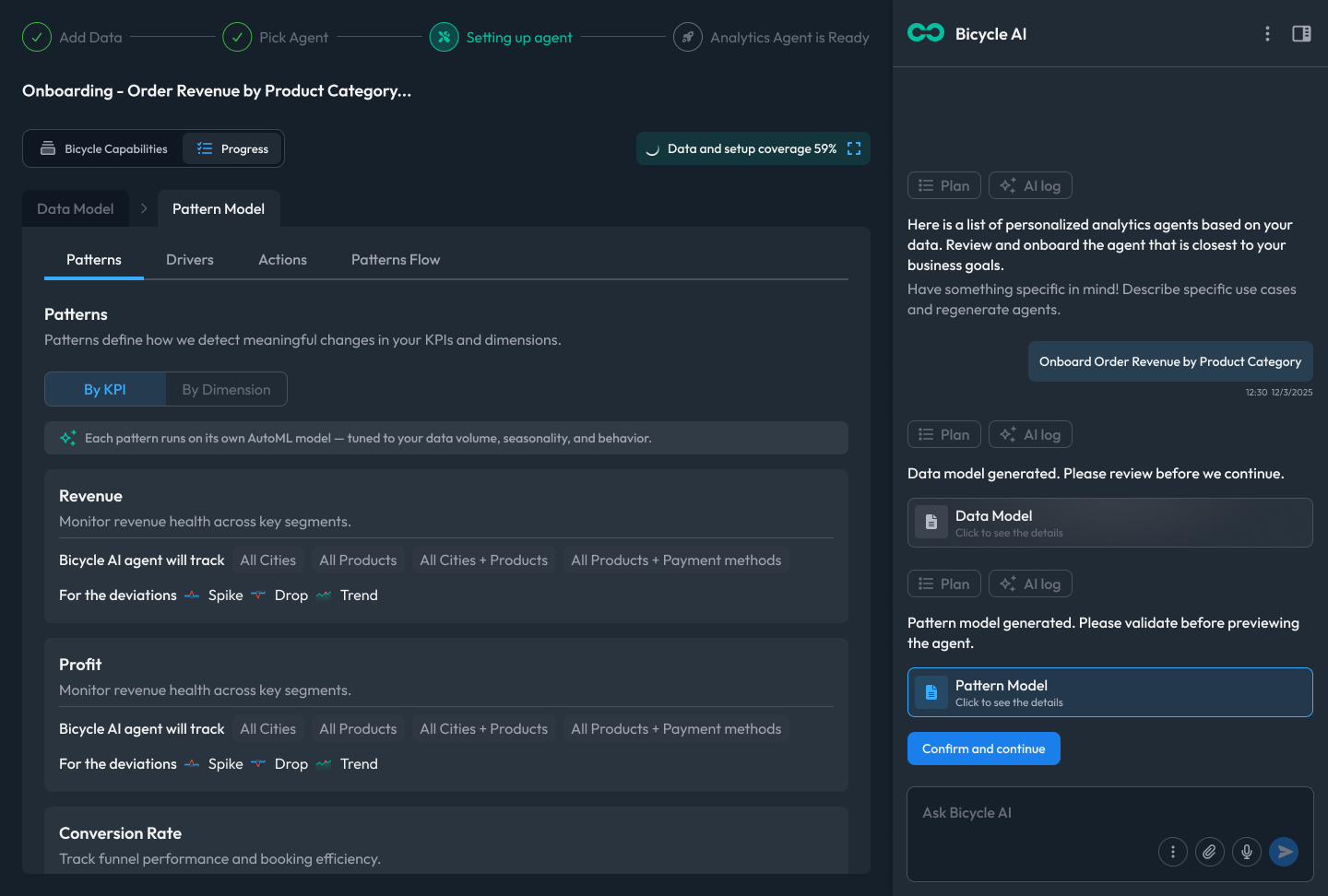
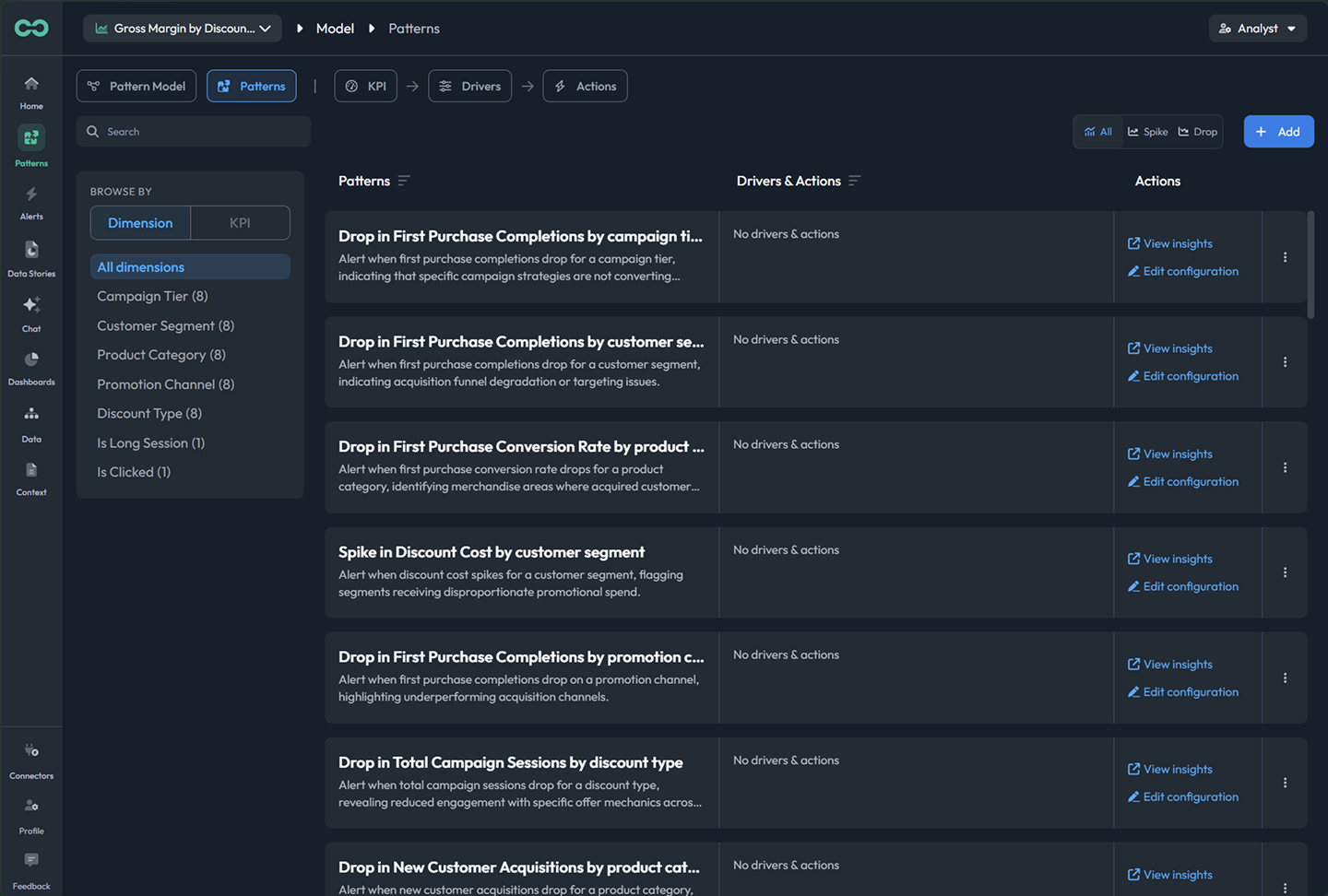
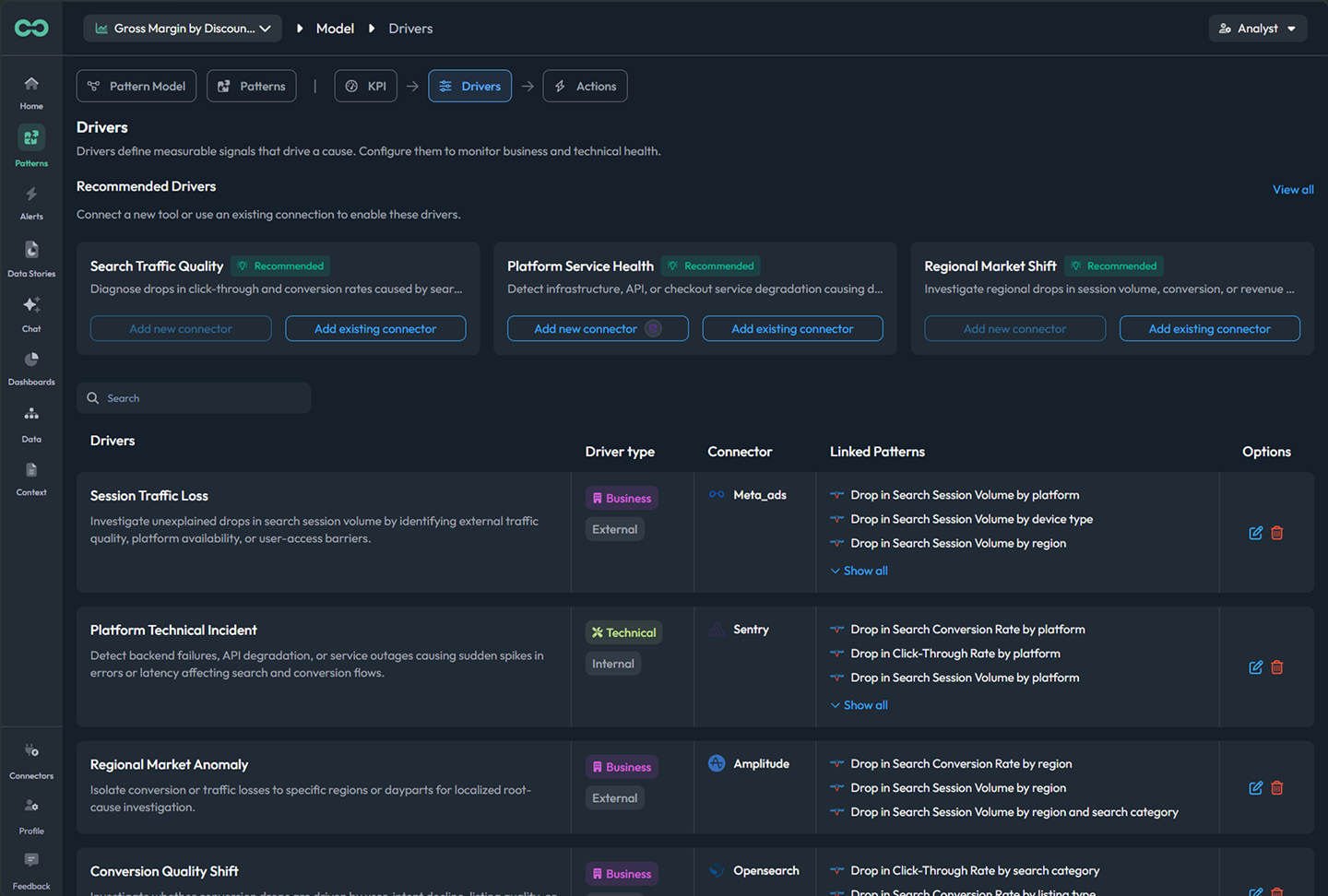
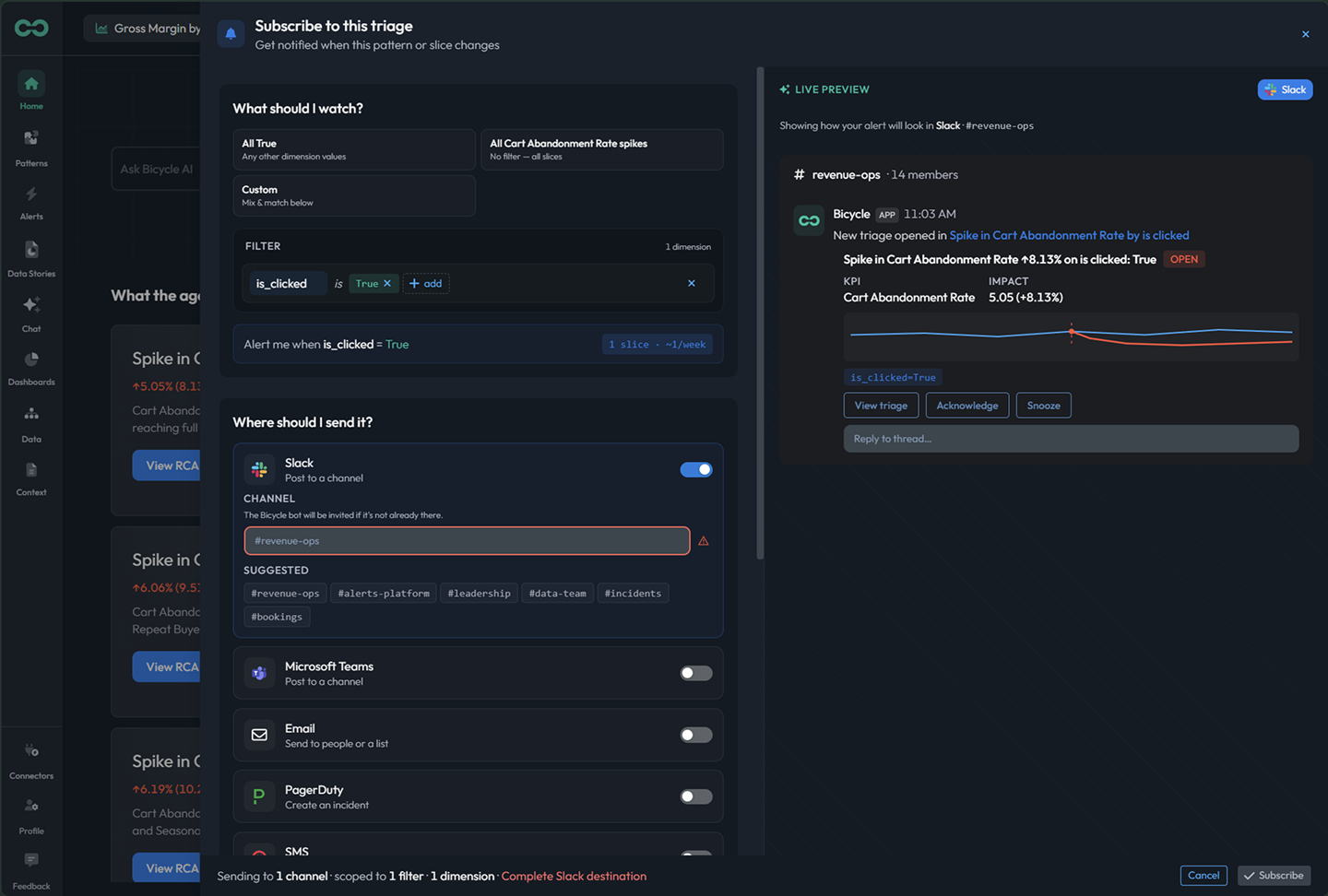
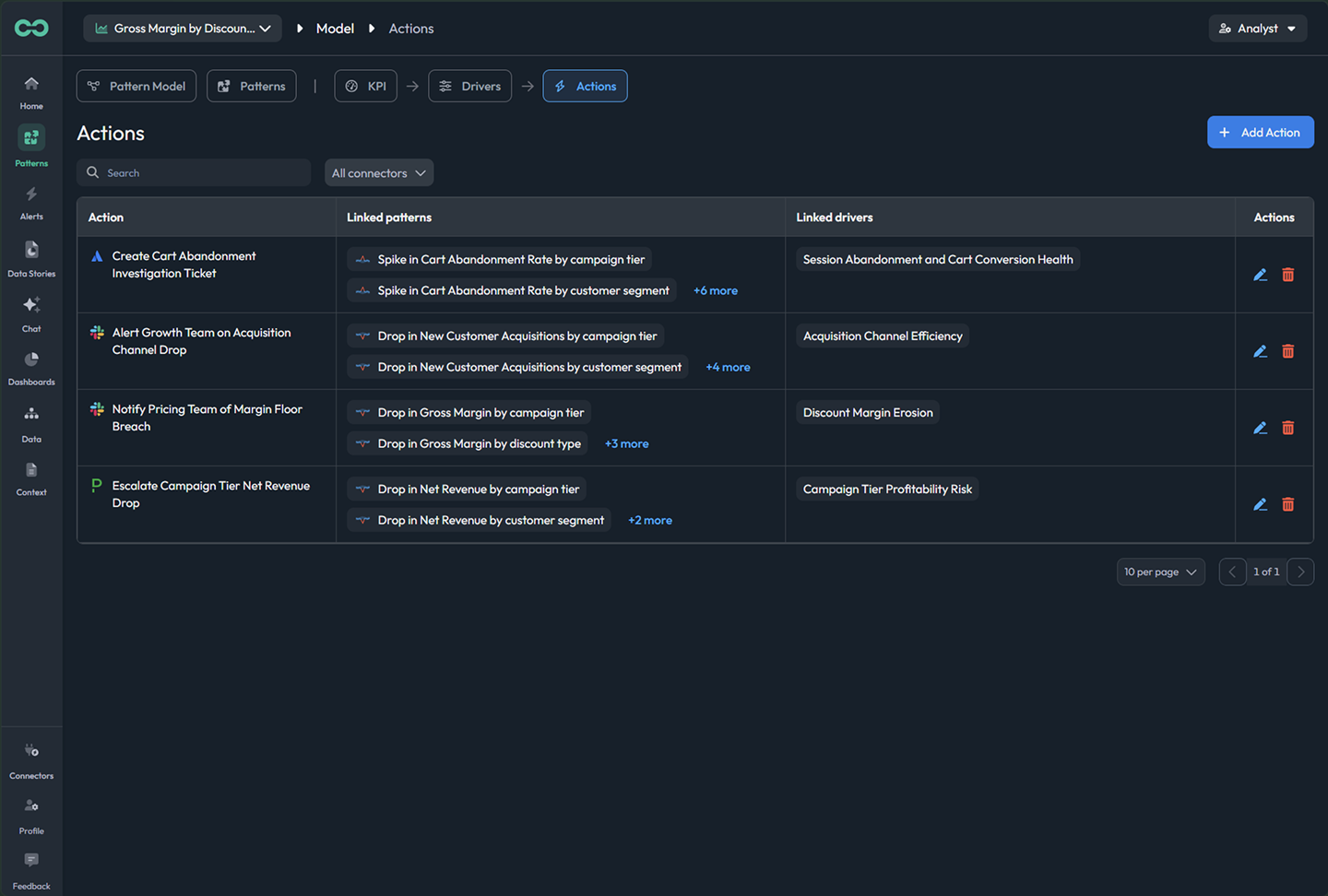
Checkout conversion dropped on a key segment. Bicycle has already checked the segments, ranked the likely causes, attached the evidence, and kept the definition governed. Your team reviews the answer, publishes the story, and tunes what should happen next time.
Every new business unit, market, and exec question used to mean more analyst hours. Bicycle works each KPI move once, on the model both teams trust, and reuses it.
New units, markets, and KPIs used to each add to the queue. Now they inherit approved definitions, patterns, and cause paths instead of starting blank. Your team governs the model; the model scales the coverage. You stay in control of trust, access, and what becomes official.
Bicycle detects the change, tests the likely drivers, and packages the evidence. You validate, tune, and publish, instead of rebuilding the same analysis every time the business asks why.
Same governed model underneath both. Not a different number in every tool.
Pre-built analytics agents activate for the KPIs where revenue actually breaks. Data & Analytics tunes them instead of defining every KPI, driver tree and alert from scratch.
Every Bicycle number is defensible by default. Every alert, story, dashboard and chat answer arrives carrying its definition, lineage and evidence, plus what was checked and ruled out. Self-service runs inside one governance plane Data & Analytics controls.
cvr = orders ÷ sessions · approved, governedStart on Bicycle's cloud, or run Bicycle inside your own. Either way, your team keeps governance and the data stays where your policies require.
Both models are SOC 2 Type II and GDPR. BYOC availability is scoped with our team during security review.
Bicycle was built so a security review is a short conversation: here is what the AI sees, what it never sees, and where every answer is evaluated.
Start with one recurring question in your queue: why checkout conversion, payment success, or activation moved. Bicycle watches the governed KPI, checks likely causes across the warehouse, payments, app & web, and events, and hands your team a reviewable first pass.
No credit card required · analyst-reviewed · governed from day one
The fastest way to try Bicycle. Ask in plain language and watch it detect a KPI move, explain the cause, and show the safe next step.
Learn more