
Throttle the underperformer before bookings bleed.
When rejections spike on a supplier, Bicycle ranks whether it's an allocation cap or provider API errors, on the affected routes, so you throttle the right one.
A dashboard shows rejections rose. A chatbot answers what you type. Bicycle has the cause and the fix before the bookings bleed.
No credit card required
Ranked #1 by impact. Est. exposure $42k. It found you, before you opened a dashboard.
You own supplier health, yet the "why did it spike?" answer waits in someone else's queue.
Same number, two operating models. One sends you to a ticket and a dashboard. The other brings the answer, the why, and the next step to you.
One governed system, six capabilities behind every answer.
Six capabilities, set up once and run continuously. Business teams move faster, the data team keeps governance, everyone trusts the number. Pick one to go deeper.
Rapid activation on your stack
You wait for the analytics project to finish. You want a working operating view tied to the KPIs you own, not a blank dashboard canvas.
What Bicycle does
Skip the blank canvas. Relevant KPIs, starter alerts, and prompts are populated for your role.
Speak your language. The system arrives configured for your business, not the database schema.
Use it from day one. The starter agent is reviewable and live in days, not a six-month rollout.
In practice
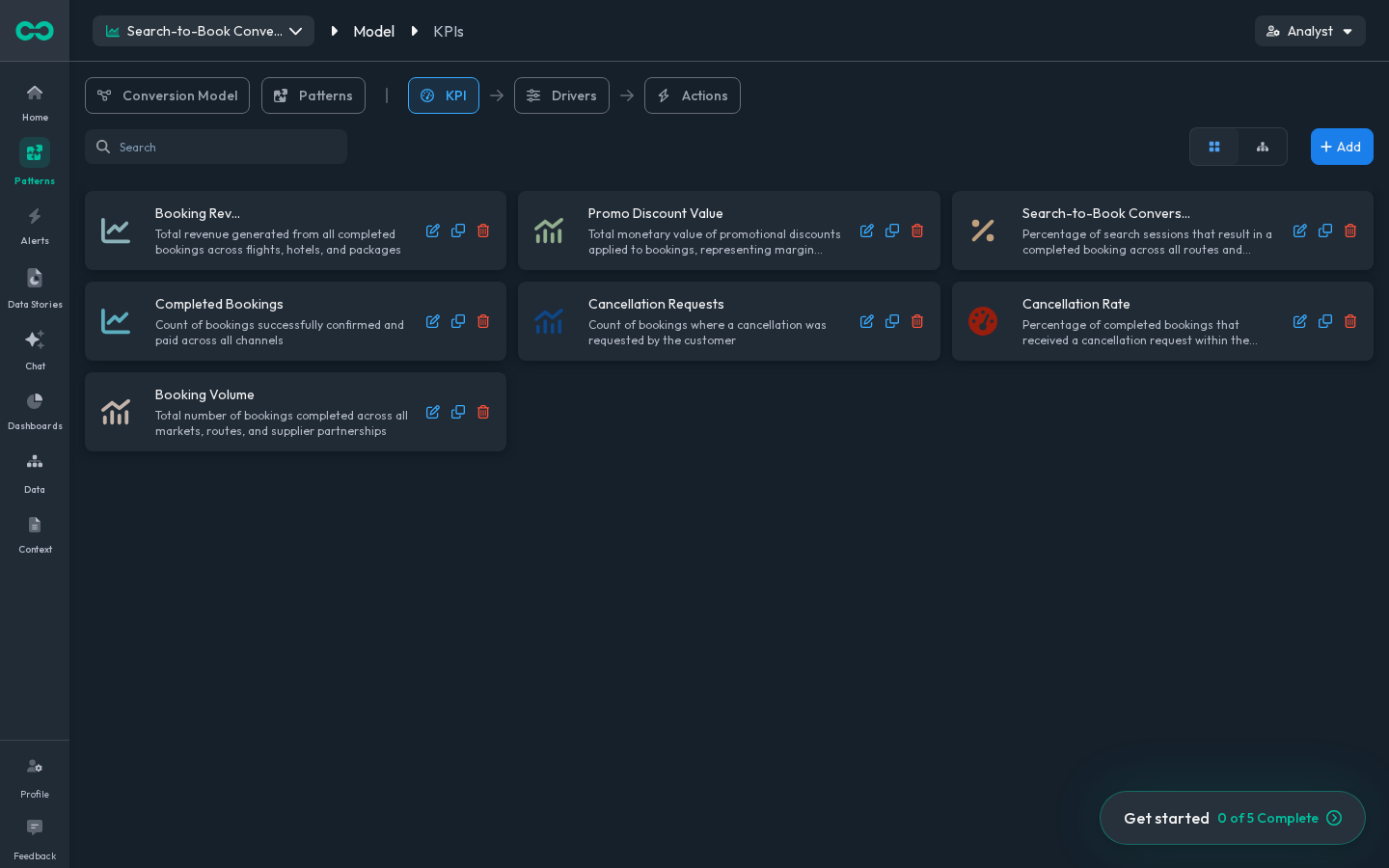
Open your supplier home on day one. Rejection rate, supplier fill, API response time, and routes are already monitored, ranked by impact.
Capabilities work together in one continuous loop. Detect → Explain → Act → Learn.
Your part of the loop is three moves: know what changed, understand why, act on it.
Know what changed before the review, down to where it moved.
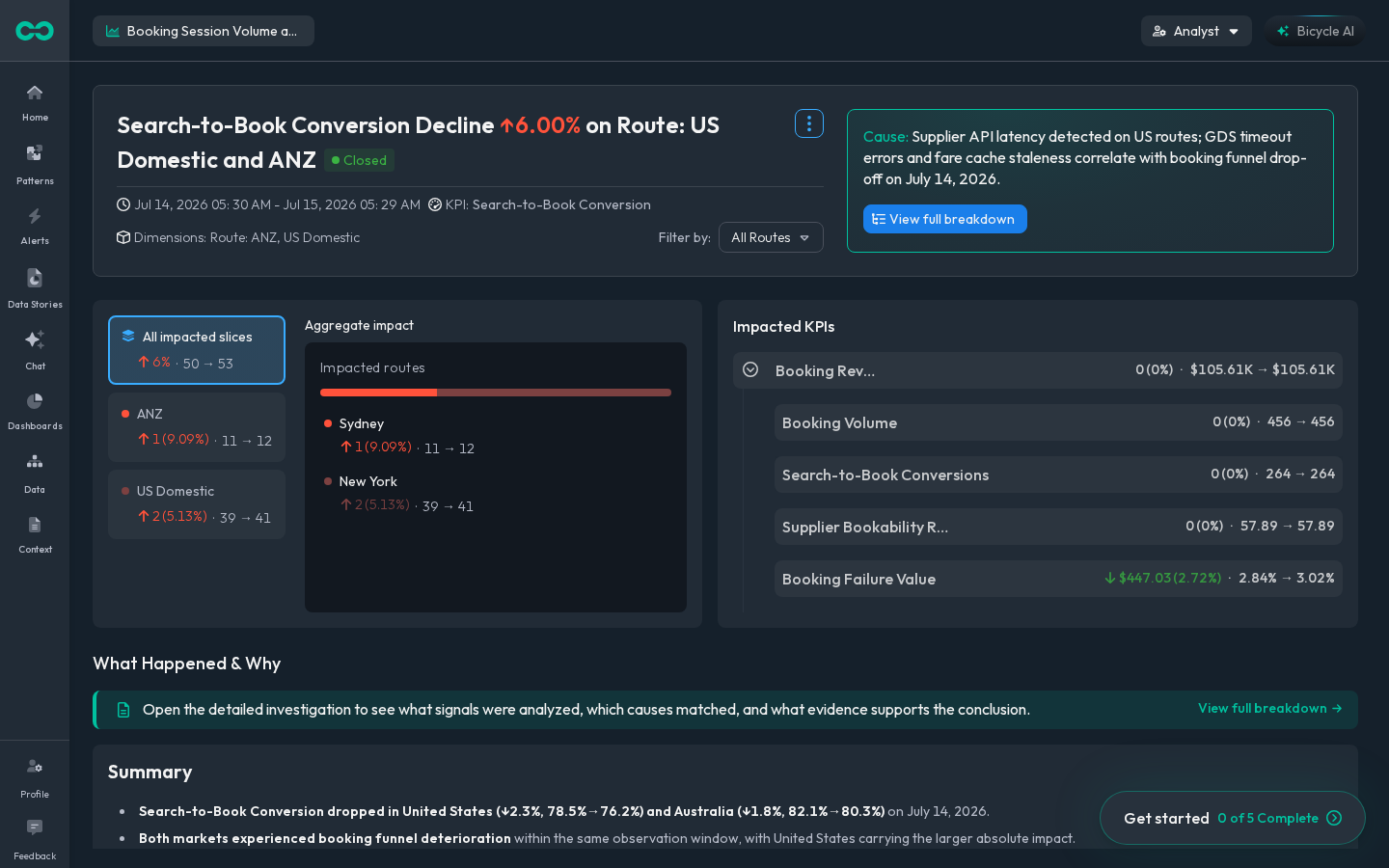
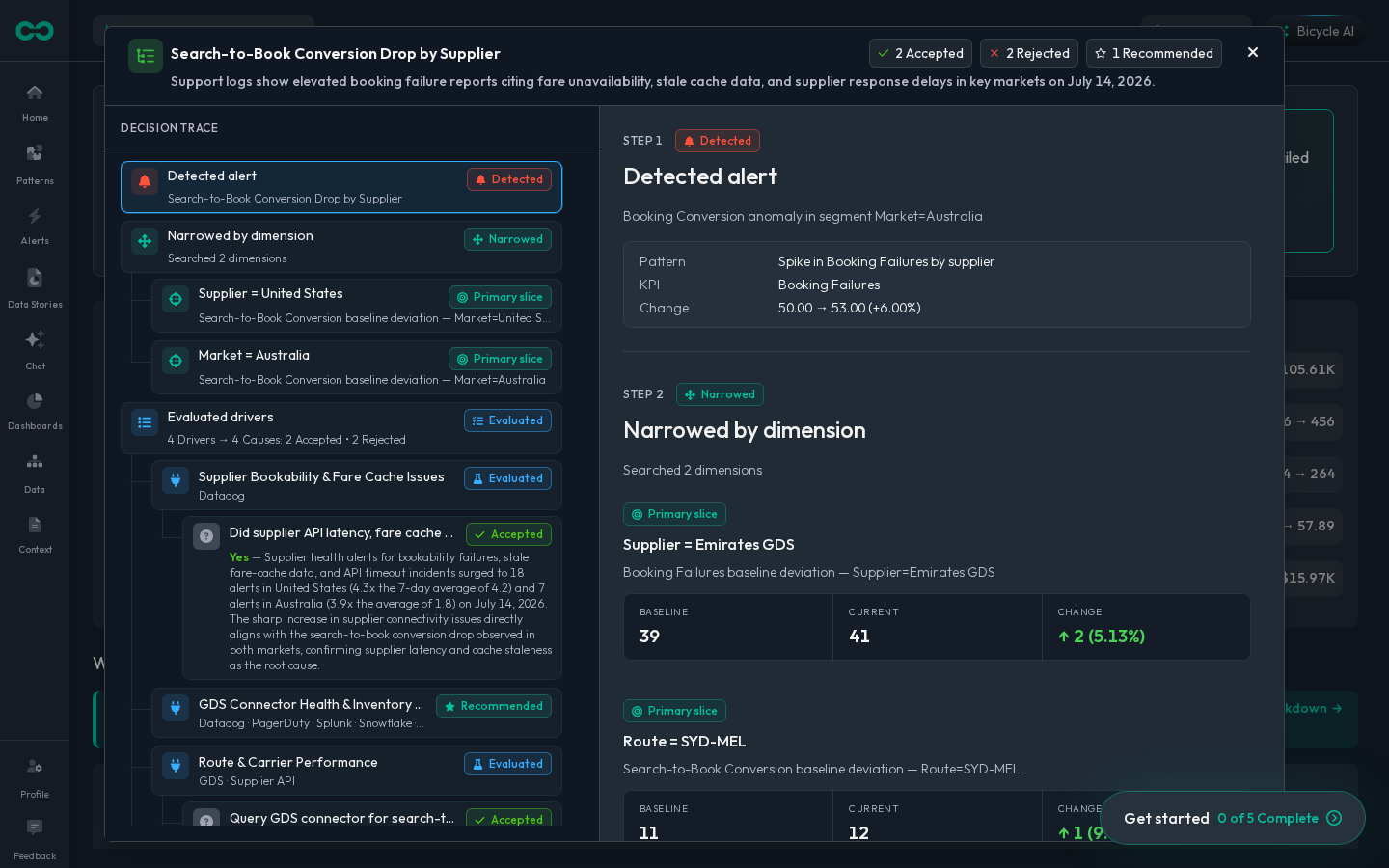
Understand why rejections spiked before you ask.
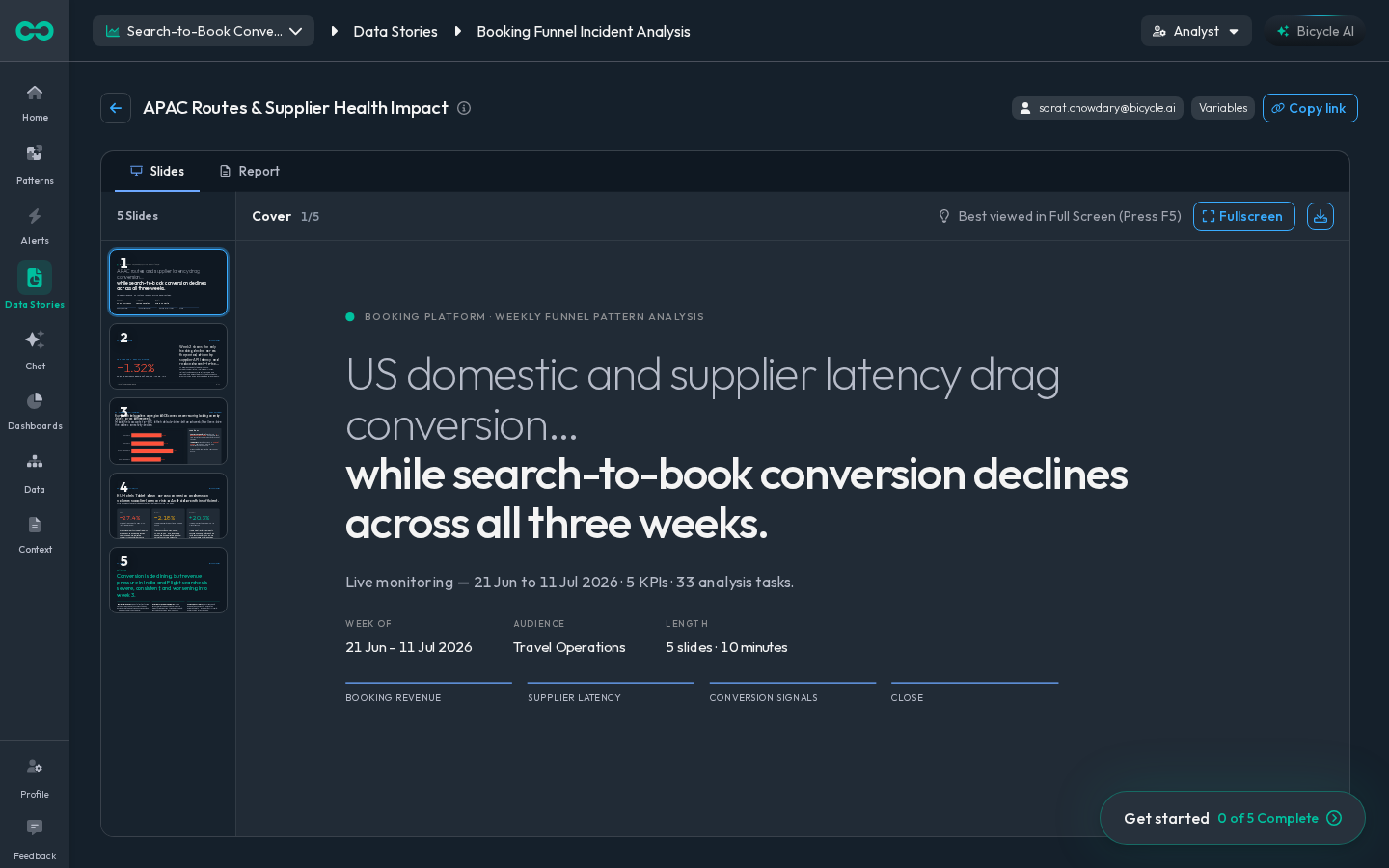
Act on it, scoped and routed to the team that owns the fix.
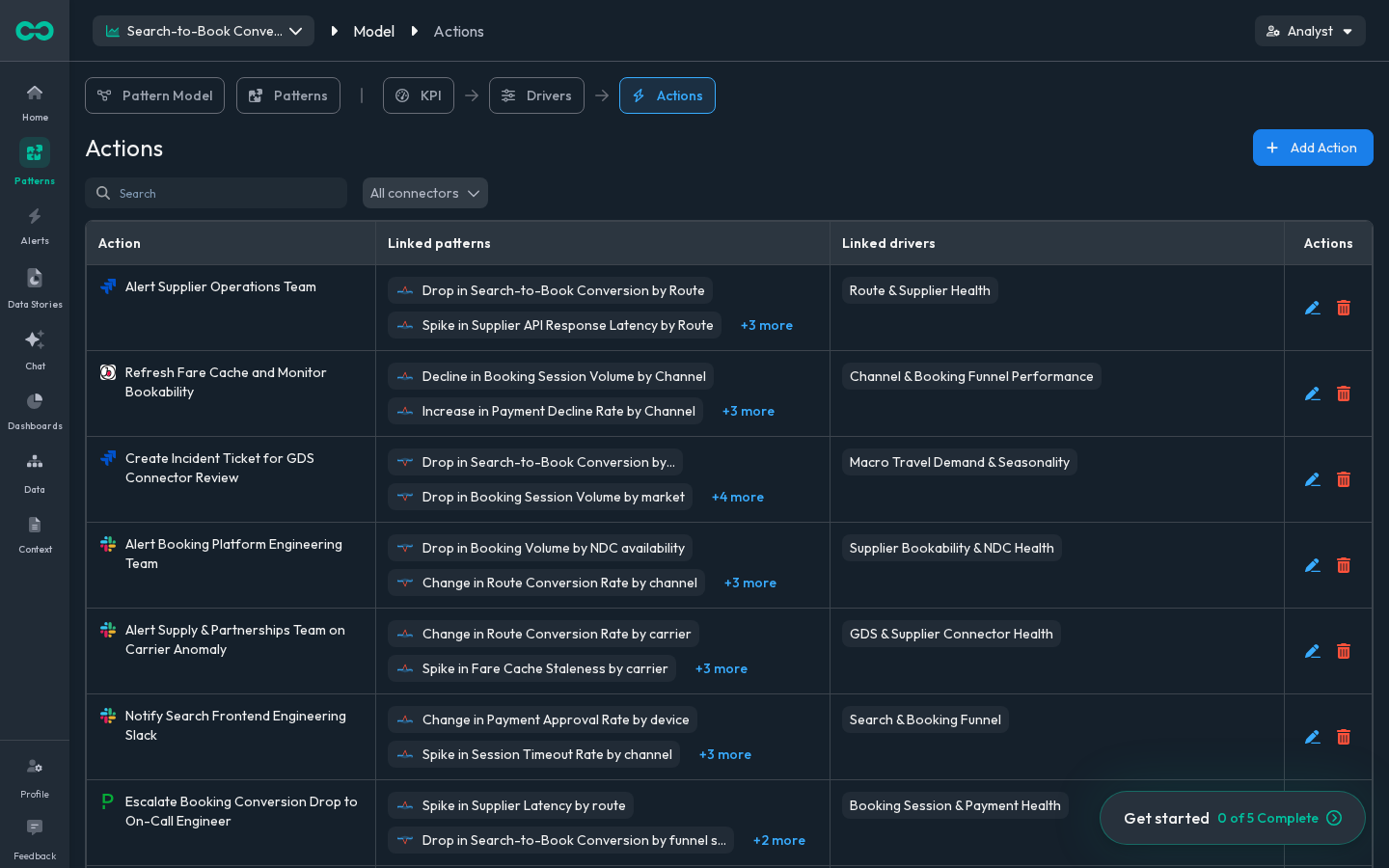
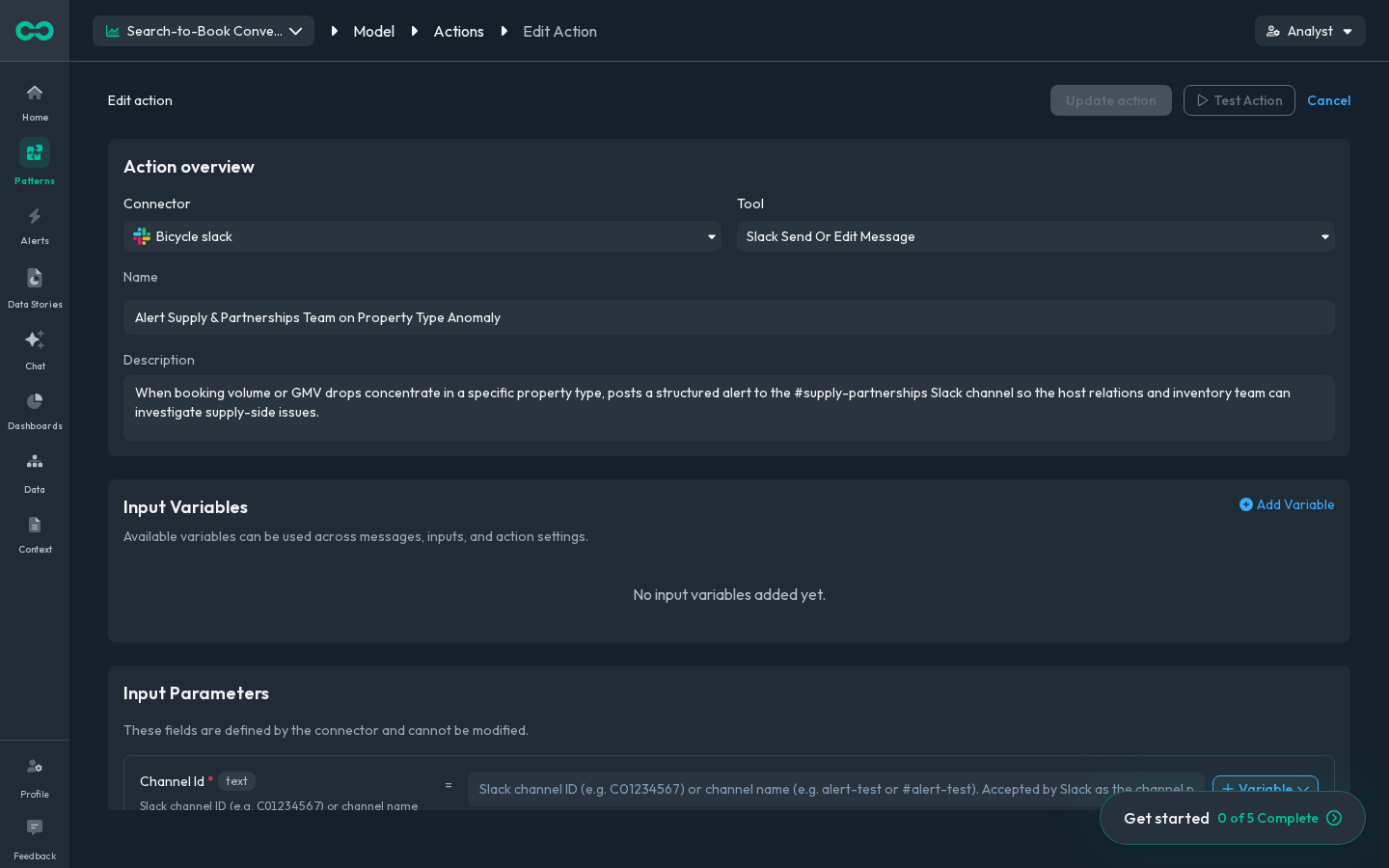
Your morning brief starts with the first pass done.
Rejection rate spiked on Supplier A across BOM→LHR routes. Bicycle has already checked where it moved, ranked the likely causes, attached the evidence, and kept the definition governed. You review the move, check the evidence, route the fix to supplier ops, and reuse it on the next spike.
Different teams own different metrics. Bicycle keeps the investigation governed.
You own supplier rejection rate. Move to the travel teams around booking funnels, bookability, repricing, and the recurring investigation, all on the same loop.
See it on your numbers.
Start with one recurring metric you own: why rejection rate or supplier fill moved. Bicycle watches the governed KPI, ranks likely causes across allocation, provider APIs, carrier, and route, and hands you a reviewable first pass, before the bookings bleed.
No credit card required · analyst-reviewed · governed from day one